
“Your price is too high” is the objection every technician hears. Most teams answer it by dropping the price. That teaches the customer to push, and it tells them the first number was never real. There is a better way, and it starts with a question.
Why Gene Slade likes the price objection
Gene Slade, the founder of Lead Ninja, says it plainly: “You know why I LOVE the price objection? Because now we’re finally getting somewhere.”
A homeowner who mentions price is still in the conversation. They have not said no. They have told you something is missing. Your job is to find out what it is before you touch the number.
The objection is information, not rejection
When a homeowner hesitates on price, one of these is usually true:
- They do not see enough value yet.
- They doubt the diagnosis.
- They are comparing you to another company.
- Someone who is not in the room has a say.
- The budget is a real limit.
Each one needs a different response. A discount fixes none of them.
Get curious before you get defensive
Gene’s advice is to ask before you adjust anything. These questions work on almost any call:
- “Compared to what?”
- “Which part feels too high?”
- “Is it the total investment or the monthly payment?”
Then stop talking and listen. The answer tells you which objection you are facing. As Gene puts it, “Don’t negotiate against yourself. Ask questions before you touch the price.”
Walk back through what the price includes
Before you defend the number, review what it covers. Talk about the scope of work, the quality of the parts and the warranty. Name who stands behind the installation. Most “too expensive” objections shrink once the customer sees what they are buying.
Tie each item back to the problem the customer described. If they told you the upstairs bedroom never cools, remind them how the recommendation fixes that room. Value lands harder when it connects to their own words.
Change the perspective, not the price
A large number feels smaller when the customer sees it over the life of the system. Gene calls this “reduce it to the ridiculous.” Break the investment down by year, by month or by day.
“You didn’t change the price. You changed the perspective.”
Be clear about the real price and the real payment terms. A cost-per-day breakdown is a way to think about value. It is not a financing offer, so never present it as one.
Offer a path, not a discount
If budget is the real barrier, give the customer a decision instead of a price cut. You can:
- Present good, better and best options.
- Explain financing in plain words.
- Stage the work over time.
Try a line like this: “Rather than change the price, let me show you the option that fits a tighter budget. There is a financing route too.” Your pricing stays honest, and the customer still has a way to say yes.
Practice it until it sounds like you
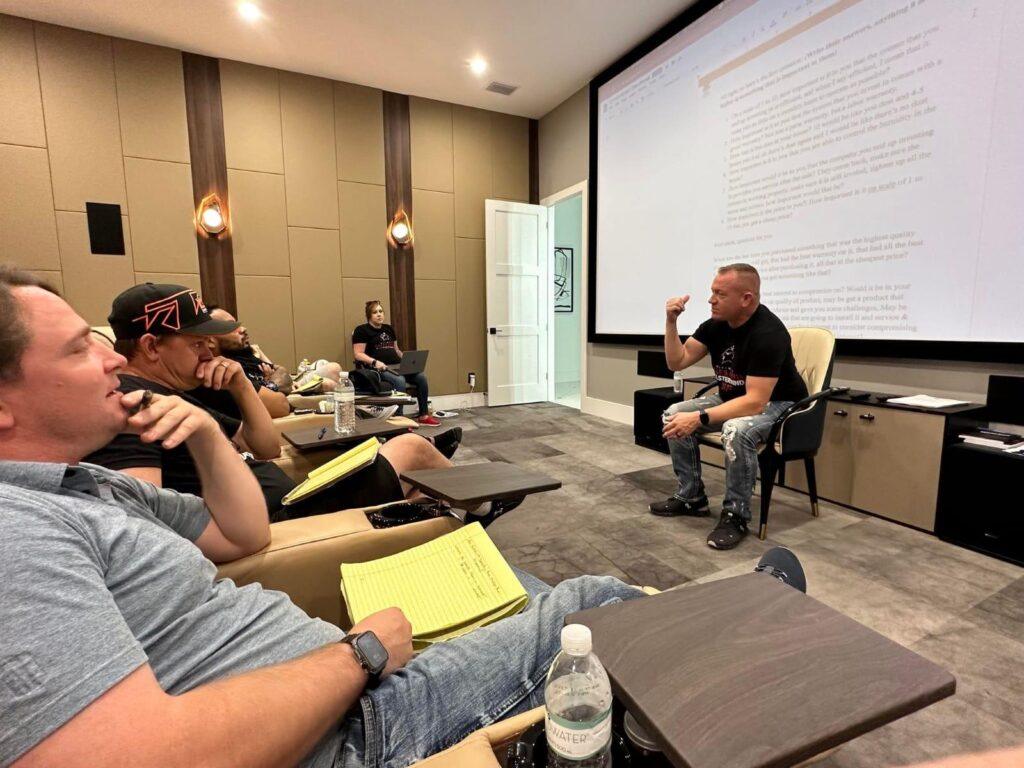
Reading this once will not change your next call. These responses stick through role-play and coaching. That is why Lead Ninja’s HVAC sales coaching runs on real kitchen-table conversations. For more answers to common pushback, read our guide to handling HVAC sales objections. The full process lives in our complete guide to HVAC sales training.
Gene Slade has spent 34 years in home services. The Lead Ninja approach is simple: do something for the customer, not to them. Handle the price conversation that way and you keep the trust, the margin and the customer.
Want your team to handle price with confidence? Book a call with Lead Ninja to talk about training for your technicians.